Best Char Kway Teow in Singapore (2026): 7 Legendary Stalls Ranked
If there is one hawker dish that captures the raw, theatrical power of Singapore’s street food culture, it is Char Kway Teow. Searing cast-iron woks exceeding 250°C, roaring plumes of vaporized pork fat, rhythmic metal clatter, and the sweet perfume of dark caramel soy sauce create a sensory marvel. When tossed with silky rice noodles, yellow egg noodles, plump blood cockles (*see hum*), Chinese sausage (*lap cheong*), and golden cubes of crispy pork lard, it represents hawker comfort food in its most uninhibited, delicious glory.
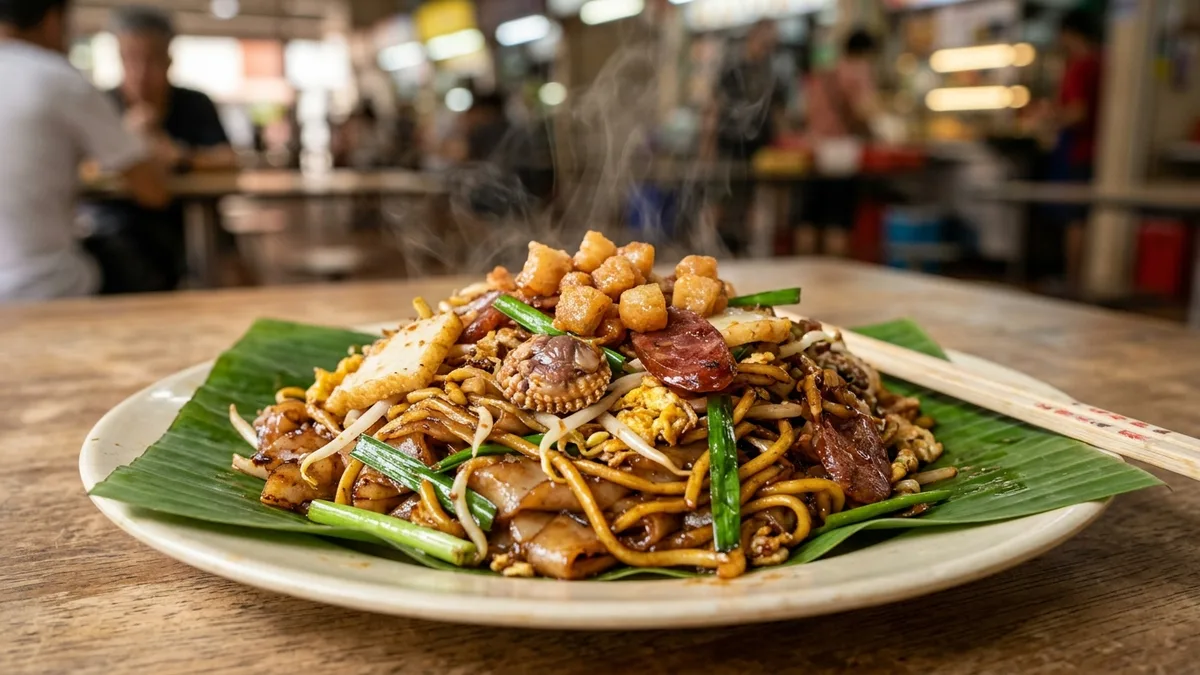
At a Glance: Top 7 Char Kway Teow Masters in Singapore
With legacy retirements reshaping Singapore's hawker map, finding authentic, actively operating char kway teow masters is more critical than ever. We independently vetted Singapore's foremost stalls across wok hei intensity, noodle texture, pork lard crispness, and cockle freshness:
| Establishment | Style / Texture | Location | Price Range | Signature Highlights | Operating Hours |
|---|---|---|---|---|---|
| No. 18 Zion Road | Smoky / Dark Sweet Glaze | Zion Riverside Food Centre #01-17 | $5.00 – $9.00 | Incredible Wok Hei, PM Lee Favourite, Michelin Bib Gourmand | Wed–Mon 12:00 PM – 9:30 PM (Tue Closed) |
| Hill Street Fried Kway Teow | Moist & Balanced / Crispy Lard | Bedok South Market #01-41 | $5.00 – $6.00 | Abundant Pork Lard Cracklings, Chye Sim Greens, Michelin Plate | Tue–Sat 11:00 AM – 4:45 PM (Sun–Mon Closed) |
| Meng Kee Char Kway Teow | Balanced Sweet-Savory | Havelock Road Cooked Food #01-07 | $5.00 – $6.00 | Father-Daughter Craft, Plump Fresh Cockles, Tender Noodles | Mon–Sat 9:00 AM – 6:00 PM (Sun Closed) |
| Lao Fu Zi Fried Kway Teow | Black Sweet / White Savory | Old Airport Road #01-12 | $6.00 – $10.00 | Customizable Black or White Sauce, Michelin Bib Gourmand | Daily 11:45 AM – 10:00 PM |
| Amoy Street Fried Kway Teow | Savory / Less Cloying | Amoy Street Food Centre #01-01 | $5.00 – $6.00 | CBD Lunch Hero, Generous Lap Cheong, Fresh Cockles | Mon–Sat 9:30 AM – 2:30 PM (Sun Closed) |
| Dong Ji Fried Kway Teow | Penang-Style Savory / Charred | Old Airport Road #01-138 | $5.00 – $6.00 | Single-Plate Fry, Fresh Sea Prawns, Intense Garlicky Char | Daily 8:00 AM – 1:30 PM (Irregular rest days) |
| Ang Mo Kio Fried Kway Teow | Old-School Wet / Smoky Cai Po | Blk 724 Ang Mo Kio Ave 6 #01-22 | $4.50 – $5.50 | Heartland Queues, Crunchy Pork Lard, Plump Cockles, Rich Caramel Glaze | Tue–Sun 10:30 AM – 2:00 PM (Mon & Fri Closed) |
The Coolie Comfort Food Origin: From Pushcarts to Gastronomic Art
Char Kway Teow (literally "stir-fried rice cake strips" in Teochew and Hokkien) originated in the 19th and early 20th centuries as humble, high-calorie sustenance for manual laborers, coolies, farmers, and fishermen. Operating from wooden pushcarts along the Singapore River, Telok Ayer Basin, and Rochor Canal, itinerant hawkers sold freshly fried noodles wrapped in banana leaves or newspaper cones for just a few cents.
Coolies needed cheap, concentrated calories to endure grueling physical labor under the tropical sun. Hawkers met this need by tossing leftover flat rice noodles and yellow wheat noodles in rendered pork fat, sweet dark caramel soy sauce, and handfuls of cheap, protein-rich blood cockles gathered from local mangrove shores.
Over the decades, this survival food transformed into one of the most technically demanding disciplines in Chinese hawker gastronomy. A master hawker must endure punishing radiant heat, controlling an unyielding cast-iron wok with muscular wrist rhythm to sear each batch without burning the sugars.
The Science of Wok Hei: Heat, Pork Lard & The Maillard Reaction
Diners often ask why home cooks and commercial restaurant stir-fries cannot replicate the taste of hawker Char Kway Teow. The answer lies in thermodynamics:
True Wok Hei (Breath of the Wok)
True wok hei occurs only when high-pressure blast burners heat a seasoned cast-iron wok above 250°C. As the hawker rapidly tosses the noodles into the air, microscopic oil droplets vaporize in the rising column of superheated air. The vaporized oil combusts momentarily, bathing the falling noodles in an aerosolized mist of smoky aromatic compounds. This produces the intoxicating, lightly charred aroma that coats every mouthful without tasting burnt.
The Rendered Pork Lard Foundation
Vegetable oil lacks the high smoke point and fatty acid profile necessary for proper Char Kway Teow. Traditional hawkers render fresh pork fat daily into liquid lard. It lubricates the fragile rice noodles, preventing them from breaking apart under aggressive wok tossing, while imparting a rich, savory mouthfeel. The byproduct—crackling, golden-brown pork lard cubes (*bak yu pok*)—adds essential crunch against the tender noodles.
Black vs. White: The Great Char Kway Teow Divide
While Singaporeans predominantly adore the rich, dark, and sweet style, the hawker landscape offers two distinct philosophies:
- Classic Singapore Black Style: Characterized by the generous addition of thick, dark caramel sweet soy sauce (kecap manis). As the thick sauce hits the screaming-hot wok surface, the sugars caramelize instantly, creating a glossy, bittersweet coating that clings to the noodles. Exemplified by No. 18 Zion Road, Hill Street, and Ang Mo Kio Fried Kway Teow.
- Savory White Style (Penang / Northern Influence): Completely omits dark sweet soy sauce. Instead, the noodles are seasoned with light soy sauce, fish sauce, aromatic garlic, and fresh chili paste. The result is a paler, drier plate that puts pure noodle char, fresh seafood sweetness, and egg savoriness front and center. Exemplified by Dong Ji Fried Kway Teow and the white version at Lao Fu Zi.
The 7 Best Char Kway Teow Stalls in Singapore (2026 Rankings)
No. 18 Zion Road Fried Kway Teow (Zion Riverside Food Centre)
The Wok Hei Sovereign: Prime Minister's Favorite Char Kway Teow with Intense Smoky Char & Dark Sweet Glaze
| Hawker Centre Stall | 70 Zion Road, Stall #01-17 Zion Riverside Food Centre, Singapore 247792 |
|---|---|
| Nearest MRT | Havelock MRT (TE16) Exit 1 · 3 min walk across Zion Road |
| Opening Hours | Wednesday – Monday: 12:00 PM – 3:00 PM · 3:30 PM – 9:30 PM (Closed Tuesdays) |
| Pricing Structure | Small ($5.00) · Medium ($7.00) · Large ($9.00) |
| Signature Highlights | Blistering Wok Hei, Thick Dark Caramel Soy Glaze, Attended by Prime Minister Lee Hsien Loong, Michelin Bib Gourmand |
| Find it on map | Find it on map |
Why No. 18 Zion Road is legendary: Helmed by veteran hawker Mr. Ho Kian Tat, No. 18 Zion Road has held court along the banks of the Singapore River for decades. Famously praised by Senior Minister Lee Hsien Loong, who queued personally for his plate, this stall holds multi-year Michelin Bib Gourmand honors.
Mr. Ho’s style leans towards the quintessential dark, deeply caramelized school. Tossing small batches in his roaring cast-iron wok, he coats the flat kway teow and yellow noodles in a proprietary dark sweet soy sauce that caramelizes into a glossy mahogany sheen.
The noodles boast an extraordinary level of wok hei—intense, smoky, and fragrant—without tasting burnt. Packed with sweet Chinese sausage (*lap cheong*), fish cake slices, tender cockles, and crisp bean sprouts that retain their snap, No. 18 delivers the most satisfying smoky-sweet punch on the island.
Hill Street Fried Kway Teow (Bedok South)
The East Coast Dynasty: Michelin-Selected Institution Renowned for Abundant Crispy Pork Lard & Wok Mastery
| Hawker Centre Stall | 16 Bedok South Road, #01-41 Bedok South Market & Food Centre, Singapore 460016 |
|---|---|
| Nearest MRT | Bedok MRT (EW5) · Short bus ride (Bus 16, 229) to Bedok South |
| Opening Hours | Tuesday – Saturday: 11:00 AM – 4:45 PM (Closed Sundays & Mondays; sells out early) |
| Pricing Structure | Small ($5.00) · Large ($6.00) |
| Signature Highlights | Shower of Golden Crispy Pork Lard, Chye Sim Greens, Delicate Moisture Balance, Michelin Plate |
| Find it on map | Find it on map |
Why Hill Street (Bedok South) is beloved: Tracing its heritage to the famous street hawkers of the old Hill Street precinct, this stall in Bedok South has been expertly helmed by second-generation master Mr. Ng Cheng Huat for over 30 years.
Hill Street is celebrated for achieving a sublime balance between moist gravy and dry wok breath. Unlike stalls that drown the plate in sauce, Mr. Ng relies on small, precise splashes of seasoned stock and sweet dark soy, allowing the yellow noodles and rice noodles to cook evenly while preserving individual noodle springiness.
What sets Hill Street apart is their lavish generosity with pork lard. A fresh shower of crispy, golden lard cracklings is tossed over the noodles right before serving, delivering a loud, satisfying crunch with every mouthful. Combined with tender fresh cockles, sweet Chinese sausage, and the rare addition of chopped *chye sim* vegetables, it offers an exceptionally well-rounded plate.
Meng Kee Char Kway Teow (Havelock Cooked Food Centre)
The Father-Daughter Legacy: Perfectly Restrained Sweet-Savory Glaze with Tender, Smoky Noodle Strands
| Hawker Centre Stall | Blk 22A Havelock Road, #01-07 Havelock Road Cooked Food Centre, Singapore 161022 |
|---|---|
| Nearest MRT | Havelock MRT (TE16) Exit 2 · 3 min walk |
| Opening Hours | Monday – Saturday: 9:00 AM – 6:00 PM (Closed Sundays) |
| Pricing Structure | Small ($5.00) · Medium ($6.00) |
| Signature Highlights | Father-Daughter Culinary Craft, Tender Noodle Texture, Mildly Sweet Balanced Soy, Fresh Cockles |
| Find it on map | Find it on map |
Why Meng Kee is a connoisseur's choice: Operating for over 40 years at Havelock Road Food Centre, Meng Kee is a heartwarming family dynasty where veteran hawker Mr. Lim and his daughter fry side by side with practiced harmony.
Meng Kee represents the gentler, more refined end of the Char Kway Teow spectrum. While many stalls rely on heavy sugar glazes, Meng Kee uses a lighter touch with sweet dark soy sauce, allowing the savory garlic notes, egg fragrance, and briny essence of fresh cockles to shine through.
The noodles are extraordinarily tender and slippery, coated in just enough savory oil to glisten without leaving a greasy pool on the plate. If you find heavy, sticky sweet sauces overwhelming, Meng Kee offers the ideal harmony of smoke, savoriness, and sweetness.
Lao Fu Zi Fried Kway Teow (Old Airport Road Food Centre)
The Michelin Customizer: Famed for Both Classic Black Sweet Sauce and Garlic White Char Kway Teow
| Hawker Centre Stall | 51 Old Airport Road, #01-12 Old Airport Road Food Centre, Singapore 390051 |
|---|---|
| Nearest MRT | Dakota MRT (CC8) Exit A · 3 min walk |
| Opening Hours | Daily: 11:45 AM – 10:00 PM (Irregular rest days; check stall notices) |
| Pricing Structure | Small ($6.00) · Medium ($8.00) · Large ($10.00) |
| Signature Highlights | Choice of Black (Sweet) or White (Savory), Michelin Bib Gourmand, Generous Cockles and Lup Cheong |
| Find it on map | Find it on map |
Why Lao Fu Zi is an Old Airport Road icon: Holding pride of place near the entrance of Old Airport Road Food Centre at unit #01-12, Lao Fu Zi is a multi-year Michelin Bib Gourmand recipient that has served loyal customers for generations.
Lao Fu Zi stands out for offering diners a rare choice: Black (黑) or White (白). Their Black version is richly caramelized with thick dark molasses soy, charred bean sprouts, and savory Chinese sausage.
Their White version is a must-try for savory purists: completely free of sweet black sauce, it is stir-fried over high heat with egg, minced garlic, light soy sauce, and fresh blood cockles. This allows the smoky wok char and maritime seafood freshness to take center stage, offering a refreshing departure from standard sweet styles.
Amoy Street Fried Kway Teow (Amoy Street Food Centre)
The Financial District Stalwart: 60-Year Heritage Stall Serving Balanced, Savory Char Kway Teow to CBD Queues
| Hawker Centre Stall | 7 Maxwell Road, #01-01 Amoy Street Food Centre, Singapore 069111 |
|---|---|
| Nearest MRT | Tanjong Pagar MRT (EW15) Exit G / Telok Ayer MRT (DT18) · 3 min walk |
| Opening Hours | Monday – Saturday: 9:30 AM – 2:30 PM (Closed Sundays; sells out early during lunch peak) |
| Pricing Structure | Small ($5.00) · Large ($6.00) |
| Signature Highlights | Savory Lighter Soy Blend, Fresh Plump Blood Cockles, Crispy Lard, Prime Corner Unit #01-01 |
| Find it on map | Find it on map |
Why Amoy Street is the CBD champion: Occupying prime stall #01-01 on the ground floor of Amoy Street Food Centre since the building opened, this stall traces its heritage back to the 1960s when the founder fried noodles on the streets of Chinatown.
Now helmed by second-generation hawkers, Amoy Street caters to busy financial professionals who crave classic hawker comfort without an overwhelming sugar coma. Their sauce recipe features a higher ratio of savory light soy to dark sweet molasses, resulting in a cleaner, more aromatic profile.
The noodles are tossed with generous helpings of sweet Chinese sausage, springy fish cakes, and freshly shucked blood cockles that are barely kissed by the wok heat. Topped with golden pork lard, it delivers a deeply satisfying, savory lunch that powers through the workday.
Dong Ji Fried Kway Teow (Old Airport Road Food Centre)
The Single-Plate Wok Purist: Rare Penang-Style Savory Char with Wild Sea Prawns, Garlic & Intense Heat
| Hawker Centre Stall | 51 Old Airport Road, #01-138 Old Airport Road Food Centre, Singapore 390051 |
|---|---|
| Nearest MRT | Dakota MRT (CC8) Exit A · 3 min walk |
| Opening Hours | Daily: 8:00 AM – 1:30 PM (Frequently sells out early; irregular rest days) |
| Pricing Structure | Small ($5.00) · Large ($6.00) |
| Signature Highlights | Fried Strictly One Plate at a Time, Fresh Sea Prawns with Shells, Fiery Garlicky Wok Hei, Penang-Style Savory Profile |
| Find it on map | Find it on map |
Why Dong Ji is a purist's treasure: Tucked along the rear aisle of Old Airport Road Food Centre at unit #01-138, Dong Ji is operated by veteran hawker Mr. Teng, who stubbornly adheres to one of the rarest traditions in modern hawker culture: frying strictly one single plate at a time.
While frying single plates results in long waits, the quality difference is stunning. With only a single portion of noodles in the wok, the cast-iron temperature never drops. Mr. Teng sears the noodles in high-heat garlic oil, infusing every individual strand with fiery, dry wok breath.
Leaning towards the northern Malaysian (Penang/Perak) style, Dong Ji uses minimal sweet black sauce. Instead, the plate is savory, spicy, and egg-forward, topped with fresh, shell-on wild sea prawns, plump cockles, and fragrant Chinese chives. For diners who appreciate artisanal, unhurried wok mastery, Dong Ji is pure hawker gold.
Ang Mo Kio Fried Kway Teow (Blk 724 Ang Mo Kio)
The Heartland Wok Legend: Veteran Couple's Vintage Teochew Wet-Style Fry with Fragrant Cai Po & Rich Caramel Soy
| Hawker Centre Stall | Blk 724 Ang Mo Kio Ave 6, #01-22 Ang Mo Kio Central Market & Food Centre, Singapore 560724 |
|---|---|
| Nearest MRT | Ang Mo Kio MRT (NS16) Exit C · 4 min walk through AMK Town Centre |
| Opening Hours | Tuesday – Sunday: 10:30 AM – 2:00 PM (Closed Mondays & Fridays; sells out very quickly) |
| Pricing Structure | Small ($4.50) · Large ($5.50) |
| Signature Highlights | Vintage Teochew Wet-Style Fry, Fragrant Preserved Radish (Cai Po), Fresh Blood Cockles, Crispy Rendered Lard |
| Find it on map | Find it on map |
Why Ang Mo Kio Fried Kway Teow is a heartland treasure: Helmed by an unassuming elderly hawker couple at stall #01-22 of Blk 724 Ang Mo Kio Central Market & Food Centre, this stalwart is widely regarded across the northern heartlands as a masterclass in classic Teochew stir-fry.
Operating with a disciplined 3.5-hour morning-to-lunch window, the uncle fries each batch in controlled small quantities over roaring burner heat. What sets this stall apart is its savory dimension: alongside thick sweet black soy sauce and freshly rendered pork fat, he adds a punchy spoonful of preserved radish (cai po), creating an addictive interplay of sweetness, garlic fragrance, and salty crunch.
The noodles are served slightly wetter and glossy, thoroughly emulsified with egg ribbons, tender slices of Chinese sausage (*lap cheong*), and juicy, plump blood cockles. Arrive early before the lunchtime rush—once their daily prep sells out, the shutters come down immediately.
The Connoisseur's Tasting Guide: 5 Rules for Char Kway Teow Mastery
1. Strictly Dine-In Only
Never order Char Kway Teow for takeaway. Trapped steam inside styrofoam or paper containers over-cooks the fragile rice noodles, turns juicy cockles rubbery, and reduces crispy pork lard to mush within 10 minutes.
2. Request "See Hum Mai Dao" (Barely Cooked Cockles)
If you appreciate tender, juicy blood cockles, ask the hawker for "see hum mai dao" (cockles barely cooked). The hawker will fold the cockles in at the very last second, allowing the residual noodle heat to gently warm them.
3. Request Extra Pork Lard Upfront
Many stalls keep freshly fried pork lard cracklings in a side tray. When ordering, politely ask for extra "bak yu pok" to guarantee a loud, satisfying crunch on top of your noodles.
4. The Lime Dilemma
Traditionalists argue that squeezing calamansi lime over Char Kway Teow is a recent trend that masks delicate wok hei. Taste your noodles first unadorned; only squeeze lime over the final third of the plate if you need acidity to cut through the richness.
5. Beverage Pairings
Because Char Kway Teow is rich in rendered pork fat and caramelized sugars, pair your meal with an ice-cold fresh sugarcane juice with lemon, an unsweetened iced green tea, or grass jelly drink to refresh your palate.
Frequently Asked Questions
What is the difference between Singapore-style and Penang-style Char Kway Teow?
Singapore-style Char Kway Teow is famously dark, sweet, and moist, stir-fried with a mixture of flat rice noodles and yellow wheat noodles in thick dark sweet caramel soy sauce (kecap manis), garlic, blood cockles, Chinese sausage (lap cheong), and generous cubes of crispy pork lard. In contrast, Penang-style Char Kway Teow is lighter in color, drier, and savory rather than sweet, using pure flat rice noodles without yellow noodles, seasoned with light soy sauce, chili paste, garlic, duck eggs, and plump sea prawns.
Why is pork lard (bak yu pok) essential to authentic Char Kway Teow?
Fresh pork lard serves a dual culinary purpose in Char Kway Teow: first, fresh rendered liquid lard has a high smoke point that allows the wok to reach the extreme temperatures (exceeding 250°C) required to trigger the Maillard reaction and generate true wok hei without scorching the noodles. Second, golden fried pork lard cracklings (bak yu pok) provide an essential crunchy textural contrast against the soft, slippery noodles, infusing every bite with rich savory aroma.
Why are blood cockles (see hum) added at the very end of cooking?
Blood cockles are extremely delicate shellfish that turn tough, rubbery, and lose their maritime sweetness if overcooked. Master hawkers toss freshly shucked cockles into the wok during the final 5 to 10 seconds of searing or fold them into the noodles right as the dish is plated, allowing the residual heat of the noodles to gently warm the cockles so they burst with juicy, briny flavor.
What is the difference between 'Black' and 'White' Char Kway Teow?
'Black' Char Kway Teow is the classic Singapore style prepared with generous ladles of dark sweet molasses soy sauce, creating a rich, caramelized, slightly sweet glaze. 'White' Char Kway Teow (popularized by stalls like Lao Fu Zi at Old Airport Road) omits the sweet black sauce completely, relying solely on light soy sauce, garlic, eggs, and chili, resulting in a cleaner, more savory flavor profile that emphasizes noodle char and seafood freshness.
What gives Ang Mo Kio Fried Kway Teow (Blk 724) its distinct old-school flavor?
Ang Mo Kio Fried Kway Teow at Blk 724 Market is celebrated for its vintage Teochew wet-style fry. The stall uses a generous dash of fragrant preserved radish (cai po), well-rendered pork lard, and a deeply caramelized dark sweet soy sauce. The noodles are cooked in small batches to maintain blistering wok hei, creating a moist, glossy coating that balances sweet, smoky, and umami savory notes.
Why do the best Char Kway Teow stalls have 30- to 60-minute queues?
Unlike dishes that can be prepared in giant communal batches, legendary hawkers fry Char Kway Teow in small customized batches of one to three plates at a time. Each plate demands vigorous, continuous arm work over an intensely hot wok for 3 to 4 minutes. Because high heat cannot be rushed without ruining the texture, queues move steadily but patiently.
Can Char Kway Teow be packed for takeaway without losing quality?
Char Kway Teow suffers significantly in transit. Trapped inside paper or plastic takeaway boxes, residual steam causes the delicate rice noodles to over-cook and become mushy, while the crispy pork lard cracklings absorb moisture and turn soggy within 10 minutes. Char Kway Teow must be eaten hot straight from the wok at the hawker centre to experience peak wok hei.