Best Laksa in Singapore (2026): 8 Stalls & Eateries Ranked
Few Singapore dishes evoke as fierce territorial loyalty as laksa. From the decades-long rivalry between 328 and Janggut along East Coast Road to the nostalgic crackle of the country’s last charcoal-fired broth in Jalan Berseh, everyone has a favourite style. The secret lies in balancing lemak (rich coconut cream) with an aromatic spice paste (rempah) powered by dried shrimp, lemongrass, and fresh laksa leaves (daun kesum). This ranking highlights eight standout bowls across Singapore, spanning legacy masters, Michelin Bib Gourmand honourees, and verified halal options.
🍜 The Katong rule: Authentic Katong-style laksa features thick rice vermicelli snipped into short strands, allowing the dish to be eaten exclusively with a porcelain soup spoon — no chopsticks required.
🟢 Halal options: See #8 (Encik Tan) — fully MUIS certified across its islandwide outlets.
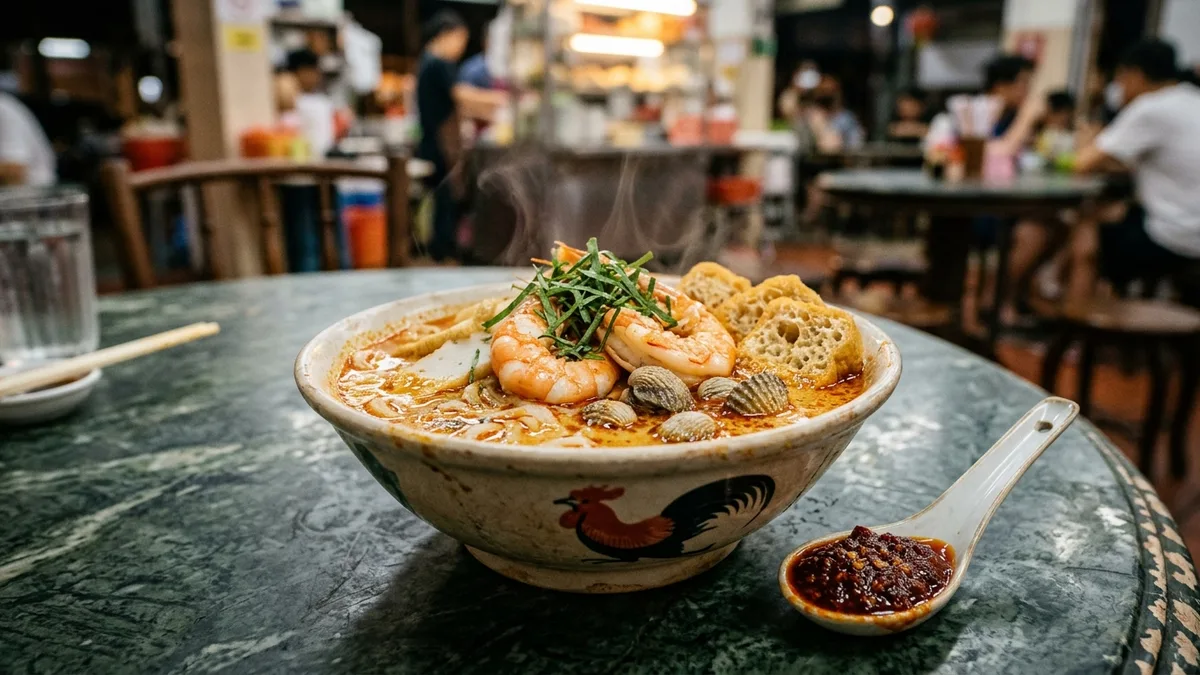
Three distinct laksa styles in Singapore
Katong Style (Spoon-Only)
Pioneered in the Peranakan heartlands of the East Coast. Thick white rice vermicelli noodles are pre-cut into bite-sized segments so diners can scoop both noodles and broth in a single mouthful. The gravy is rich, orange-tinted, and heavy on finely pounded dried shrimp and fresh laksa leaves.
Charcoal-Simmered
An endangered heritage preparation where the laksa gravy is continuously kept warm over red-hot charcoal embers. The gentle, steady heat prevents coconut cream from curdling or separating, infusing the broth with a subtle, unmistakable smokiness.
Claypot Nyonya
Served boiling in unglazed claypots that retain blistering heat from the first spoonful to the last. This style typically features an ultra-thick, velvety coconut curry that heavily coats yellow noodles or thick bee hoon, accompanied by generous strips of shredded chicken.
328 Katong Laksa
The globally famous East Coast powerhouse with a robust, punchy broth
328 Katong Laksa is undoubtedly Singapore's most internationally famous laksa institution. Cemented in culinary folklore after beating celebrity chef Gordon Ramsay in the 2013 SingTel Hawker Heroes challenge and securing multiple Michelin Bib Gourmand listings, its flagship shophouse along East Coast Road continues to draw long queues of loyalists and tourists alike.
The signature bowl features thick rice noodles snipped into short pieces, submerged in an aromatic, fiery-orange gravy where chilli oil and dried shrimp are blended directly into the soup. Piled high with fresh prawns, slices of fishcake, beansprouts, cockles, and generous dollops of sambal, it delivers an assertive, heavily spiced hit that refuses to be shy about coconut or chilli.
Pair your bowl with their freshly grilled mackerel otah wrapped in charred banana leaves, which adds a smoky, peppery contrast to the creamy gravy.
Janggut Laksa
The historical grandmother of Katong laksa, founded in the 1950s
Before commercial brand disputes gave rise to multiple Katong claimants, there was Mr. Ng Juat Swee — affectionately nicknamed "Janggut" for his distinctive facial hair. Operating from a humble pushcart along Marine Parade in the early 1950s, he is credited by food historians as the original inventor of cutting thick vermicelli so diners sitting on stools could eat without chopsticks.
Tucked quietly inside the nostalgic Roxy Square shopping arcade, Janggut Laksa serves a distinctly different broth from its neighbours. The gravy is paler, noticeably lighter on heavy coconut milk, and relies on an intensely savoury, sweet-salty foundation of ground dried shrimp. The signature dark rempah chilli paste is served on the spoon rather than pre-mixed, giving diners complete control over heat and pungency.
Because the broth is less cloying, one can easily finish an entire large bowl without that heavy, lethargic post-meal feeling known locally as gelak.
Sungei Road Laksa
Singapore’s last surviving laksa cooked over glowing charcoal embers
Located inside the bustling Jin Shui Kopitiam along Jalan Berseh, Sungei Road Laksa is an irreplaceable culinary relic. It is widely recognised as the final laksa stall in Singapore that continues to simmer its broth over an open charcoal fire. The charcoal imparts a gentle, constant thermal floor that coaxes out flavours without scorching the delicate coconut milk.
At SGD 4.00 a bowl, it remains one of the greatest food bargains in central Singapore. The portion is deliberately modest, served in a classic green melamine bowl. The broth is light, brothy, and surprisingly drinkable, fragrant with finely julienned Vietnamese coriander (daun kesum) and loaded with remarkably fresh, plump blood cockles (see hum) that are gently cooked by the hot gravy alone.
The stall runs like clockwork: aunties ladle soup and blanch noodles at dizzying speed, meaning even queues of twenty people clear in under ten minutes.
Depot Road Zhen Shan Mei Claypot Laksa
Bubbling hot claypot laksa with an ultra-thick, luscious coconut gravy
For those who crave maximum richness, Depot Road Zhen Shan Mei at Alexandra Village Food Centre sits at the opposite end of the spectrum from brothy hawker variants. Originally hailing from Depot Road before moving to Alexandra Village, this stall holds a longstanding Michelin Bib Gourmand distinction.
Each serving is brought to a rapid boil inside an earthen claypot before hitting your table. The gravy is exceptionally dense, velvety, and deep ochre, coating thick rice vermicelli like a rich curry stew. Toppings include juicy poached chicken shreds, tender fishcake, fresh cockles, and thick rectangular pillows of tau pok that drink up the molten gravy.
The claypot ensures the broth stays searingly hot until the very final bite, amplifying the aroma of blue ginger (galangal), lemongrass, and coconut.
928 Yishun Laksa
The legendary North-side void deck champion with massive portions and affordable pricing
Ask anyone living in northern Singapore where to get laksa, and they will point you to Block 928 Yishun Central 1. Situated unobtrusively on the ground floor of an HDB flat near Yishun MRT station, this humble stall rarely operates without a snaking queue spanning 20 to 30 people throughout the day.
What sets 928 apart is the extraordinary generosity of its toppings. For just SGD 4.00, each bowl comes loaded with hard-boiled egg halves, crabsticks, tau pok, fresh bean sprouts, fishcake slices, and cockles. Diners can select thick bee hoon, yellow noodles, or a combination of both.
The gravy strikes a universally approachable balance: mildly spicy, gently sweet, and well-rounded with coconut milk that is creamy without overwhelming the senses. A side spoonful of their signature roasted sambal chilli allows spice lovers to crank the heat up significantly.
Kotthika's King of Laksa
Michelin Bib Gourmand honouree crafting clean, MSG-free broth with fresh cockles
A recent breakout addition to the Michelin Bib Gourmand roster, King of Laksa (also known as Kotthika's Fusion Laksa) operates on the second-floor food court above Sheng Siong supermarket in Aljunied. Founded by former healthcare practitioners and Buddhist monastics, the stall approaches laksa with an emphasis on pure ingredients and digestive lightness.
The kitchen strictly avoids artificial MSG and excessive sodium, relying instead on a high ratio of slow-simmered prawn heads, aromatic spices, and natural aromatics. The resulting gravy is fragrant, deeply oceanic, and notably clean on the palate, leaving none of the heavy thirst that often accompanies commercial spice mixes.
Seafood enthusiasts can opt for their celebrated "hum-full" (cockle-heavy) bowl for SGD 10.00, which arrives blanketed under a mountain of plump, freshly shucked cockles swimming in spicy broth alongside large sea prawns.
Famous Sungei Road Trishaw Laksa
Multi-year Michelin Bib Gourmand stall featuring dried scallop stock and crayfish upgrades
Holding an unbroken streak on the Michelin Bib Gourmand list since 2016, Famous Sungei Road Trishaw Laksa on the second floor of Hong Lim Market is renowned for its proprietary "Asia Delight Laksa". Stall founder Mr. Soo learned the trade pulling a noodle cart through the Sungei Road thieves' market in the 1960s before setting up shop in Chinatown.
His recipe is unique: rather than loading up on heavy coconut santan, he incorporates dried scallops, dried oysters, and organic sun-dried ingredients into the broth base. The result is a lighter, golden-hued gravy that emphasizes seafood sweetness and herbaceous freshness over cloying fats.
For SGD 12.00, diners can upgrade to the signature Crayfish Laksa, which crowns the bowl with a halved freshwater crayfish, adding sweet shellfish meat to the standard assembly of prawns, fishcake, and fresh cockles.
Encik Tan 🟢 HALAL
Convenient, fully MUIS-certified halal local Nyonya laksa across 20+ Singapore locations
Finding traditional Chinese-style Nyonya laksa that carries full, verified MUIS halal certification can be challenging in Singapore, where most legacy hawker stalls operate without formal certification. Encik Tan bridges this gap brilliantly, serving nostalgia-driven local hawker staples prepared in strictly halal-certified commercial kitchens.
Their signature Laksa comes with a generous serving of springy thick bee hoon, immersed in a rich, orange-red coconut broth that delivers authentic rempah aromatics and gentle chilli warmth. Each bowl is garnished with fried tau pok squares, hard-boiled egg halves, sliced fishcake, and fresh bean sprouts.
With branches situated in major air-conditioned shopping malls near MRT stations across the island — including Suntec City, Kallang Wave Mall, and Bedok Mall — it offers an exceptionally reliable, family-friendly dining option for Muslim diners and mixed corporate groups.
Comparison: Singapore's Top 8 Laksa Stalls at a Glance
| # | Stall Name | Location | Price (SGD) | Signature Characteristic | Halal Status |
|---|---|---|---|---|---|
| 1 | 328 Katong Laksa | East Coast Road | SGD 6.30–9.30 | Spoon-only, thick dried-shrimp rempah broth | Non-halal |
| 2 | Janggut Laksa | Roxy Square (Katong) | SGD 6.00–8.50 | 1950s original recipe, lighter gravy, separate sambal | No halal cert |
| 3 | Sungei Road Laksa | Jalan Berseh | SGD 4.00 | Charcoal-fire cooked, light broth, fresh cockles | No halal cert |
| 4 | Depot Road Zhen Shan Mei | Alexandra Village | SGD 5.50–8.00 | Piping hot claypot, ultra-thick gravy, shredded chicken | No halal cert |
| 5 | 928 Yishun Laksa | Yishun Central 1 | SGD 4.00 | Generous heartland toppings, great value, egg & crabstick | No halal cert |
| 6 | King of Laksa | Aljunied Ave 2 | SGD 6.00–10.00 | MSG-free, prawn-head stock, hum-full option | No halal cert |
| 7 | Famous Sungei Road Trishaw Laksa | Hong Lim (Chinatown) | SGD 7.00–12.00 | Dried scallop & oyster broth base, crayfish option | No halal cert |
| 8 | Encik Tan | 20+ outlets islandwide | SGD 7.30 | Comforting coconut curry, convenient mall locations | ✅ MUIS certified |
Frequently asked questions about Singapore laksa
Why do Katong laksa stalls only give you a spoon?
In authentic Katong laksa, the thick rice vermicelli noodles are pre-cut into bite-sized lengths of roughly 2 to 3 centimetres before serving. This enables the customer to scoop both the noodles and the rich, spice-laden gravy together with a spoon in one mouthful, eliminating the need for chopsticks and avoiding messy soup splatters.
What is the difference between Singapore Laksa and Penang Laksa?
Singapore laksa (often classified as Laksa Lemak or Nyonya Laksa) is made with a rich coconut cream base, dried shrimp, and an aromatic rempah spiced with galangal, turmeric, and lemongrass. In contrast, Penang Laksa (Asam Laksa) features a sour, spicy, translucent tamarind and flaked mackerel fish broth without coconut milk, garnished with shredded cucumber, pineapple, and pungent prawn paste (hae ko).
Can you request laksa without cockles (see hum)?
Yes. Blood cockles are an acquired taste for some diners due to their metallic, briny flavour and semi-raw preparation. At virtually all hawker stalls, you can simply tell the cook "mai hum" (Hokkien for "no cockles") when placing your order, and they will happily omit them or substitute extra fishcake upon request.
What should you drink with laksa?
Because laksa is heavy in coconut milk and chilli heat, locals commonly pair it with refreshing, palate-cleansing hawker beverages such as fresh sugarcane juice with lemon, lime juice, homemade barley water, or iced calamansi tea.