Best Hokkien Mee in Singapore (2026): 7 Legendary Wet & Dry Stalls Ranked
Few hawker dishes evoke as fierce a debate in Singapore as Fried Hokkien Prawn Mee. Whether you pledge allegiance to the shatteringly dry, thin-bee-hoon purists who let the broth absorb completely into charred strands, or worship at the altar of wet, gooey, collagen-drenched noodles crowned with molten pork lard and fiery sambal belachan, this iconic seafood dish is a quintessential pillar of Singapore’s culinary soul.
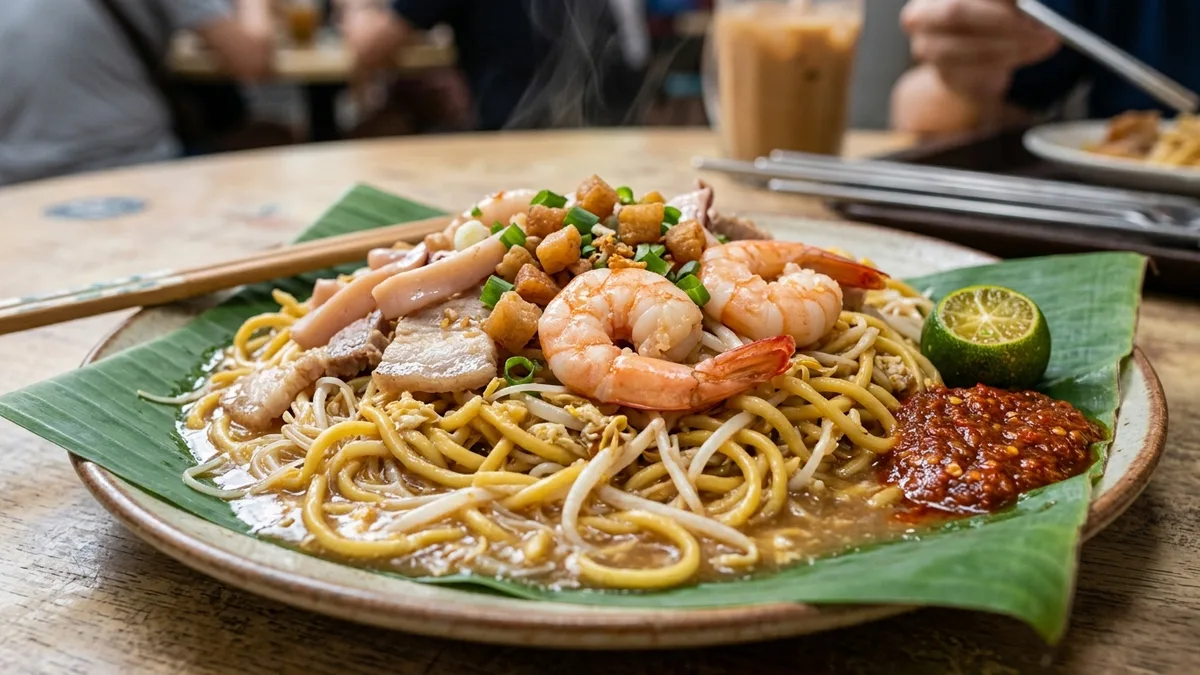
At a Glance: Top 7 Hokkien Mee Stalls in Singapore
We evaluated Singapore's premier Hokkien Mee masters across broth extraction, wok hei intensity, pork lard freshness, noodle texture, and chili pairing. Below is our verified guide to Singapore's finest stalls:
| Establishment | Style / Texture | Location | Price Range | Signature Highlights | Operating Hours |
|---|---|---|---|---|---|
| Nam Sing Fried Hokkien Mee | Ultra-Dry / Thin Bee Hoon | Old Airport Road #01-32 | $6.00 – $10.00 | Sole-Fish Prawn Stock, Cut Red Chilli Only (No Sambal) | Tue–Sun 10:00 AM – 6:00 PM (Mon Closed) |
| Swee Guan Hokkien Mee | Charcoal Fire / Medium Wet | 549 Geylang Road (Lor 29) | $7.00 – $15.00 | Roaring Charcoal Wok Hei, Plump Prawns, Smoky Char | Thu–Tue 5:00 PM – 10:30 PM (Wed Closed) |
| Come Daily (天天来) | Rich & Gooey / Thick Bee Hoon | Blk 127 Toa Payoh Lor 1 #02-27 | $6.00 – $10.00 | Collagen Gravy, Tender Pork Belly, Michelin Plate | Tue–Sun 8:00 AM – 2:30 PM (Mon Closed) |
| Xiao Di Fried Prawn Noodle | Gooey / High Umami | 153 Serangoon North Ave 1 #01-512 | $6.00 – $9.00 | Fresh Ang Kar Prawns, Crispy Lard, Gooey Gravy | Tue–Sun 11:00 AM – 3:00 PM (Mon Closed) |
| Geylang Lor 29 (Alex See) | Charcoal Stir-Fried / Traditional | 936 East Coast Road (Siglap) | $7.00 – $15.00 | Charcoal Stove, Fragrant Banana Leaf, Generous Squid | Tue–Sun 12:00 PM – 8:00 PM (Mon Closed) |
| Hainan Fried Hokkien Prawn Mee | Caramelised Dry / Charred | Golden Mile Food Centre #B1-34 | $6.00 – $9.00 | Slow Pan-Fried Reduction, Michelin Bib Gourmand | Thu–Tue 10:00 AM – 5:00 PM (Wed Closed) |
| Singapore Fried Hokkien Mee | Classic Hawker / Late Night | Whampoa Makan Place #01-32 | $6.00 – $10.00 | Michelin Bib Gourmand, Piquant Sambal, Supper Favourite | Fri–Wed 3:30 PM – 12:30 AM (Thu Closed) |
The Rochor Mee Origin: From Post-War Factory Workers to National Icon
Unlike its dark soy-braised cousin in Kuala Lumpur, Singapore’s fried prawn noodle was born in the post-World War II era along Rochor Road. Hokkien sailors and coolies who worked in nearby noodle factories would gather along the Rochor Canal at night, using excess yellow noodles and white vermicelli to fry over charcoal with surplus prawn heads and pork lard discarded by wet market traders.
Known colloquially as Rochor Mee, the dish evolved into an art form. Over the decades, hawkers refined the broth by crushing roasted prawn heads, simmering pork bone marrow, and tossing the noodles repeatedly in heavy cast-iron woks before covering them with wooden lids to let the noodles steam and absorb the essence of the sea.
The Great Style Divide: Wet vs. Dry Hokkien Mee
Singaporeans are passionately divided into two camps when ordering Hokkien Mee. Neither is superior; each represents a different mastery of thermal dynamics and noodle science:
Dry Style: The Concentrated Reduction
Championed by heritage icons like Nam Sing and Hainan Fried Hokkien Prawn Mee, the dry style requires the hawker to patiently braise the noodles in small ladles of prawn stock over intense flame until the broth has evaporated and completely absorbed into the core of each noodle strand. There is virtually no loose gravy pooling on the plate. What remains is a glistening, intensely concentrated coating of umami, seafood sweetness, and smoky charred edges.
Wet Style: The Silky Collagen Slurp
Championed by Come Daily and Xiao Di, the wet style leaves a luscious, velvety gravy that pools generously around the noodles. This gravy is achieved by simmering pork knuckles, trotters, and mountains of prawn heads until gelatin and collagen melt into the stock. Starch from the yellow noodles and eggs emulsifies the broth into a creamy, golden glaze that coats the tongue with silky richness.
Anatomy of Perfection: The 5 Pillars of Legendary Hokkien Mee
A transcendent plate of Hokkien Mee requires flawless synergy between five critical elements:
- The Master Broth: The soul of the dish. Premium stalls simmer hundreds of kilograms of prawn heads and shells (often pre-fried in lard to release orange astaxanthin oils), pork leg bones, and roasted dried sole fish (ti poh) for 4 to 8 hours until the stock turns cloudy, golden-brown, and intensely savory.
- The Noodle Harmony: A balanced ratio of yellow egg noodles and bee hoon. The yellow noodles contribute chew, alkaline bite, and starch, while bee hoon absorbs the liquid stock like a sponge. Dry-style purists prefer thin bee hoon for maximum absorption, while wet-style masters favour thick rice vermicelli for its springy QQ mouthfeel.
- Crispy Pork Lard (Bak Yu Pok): Essential for both cooking and garnish. Fresh rendered pork fat provides the high-smoke-point oil needed for searing wok hei, while freshly fried golden lard croutons add an indispensable crunch that contrasts against the soft noodles.
- The Sambal Belachan vs. Fresh Cut Chilli: Most Singaporeans demand a fiery dollop of toasted belachan sambal to add pungent shrimp depth and chili heat. However, dry-style purists (like Nam Sing) serve fresh sliced red chillies, arguing that heavy belachan masks the intricate sweetness of the artisanal seafood broth.
- The Calamansi Lime: Squeezing this tiny citrus powerhouse releases bright ascorbic acidity that cuts straight through the richness of the rendered pork fat, refreshing your palate after every hearty bite.
The 7 Best Hokkien Mee Stalls in Singapore (2026 Rankings)
Nam Sing Fried Hokkien Mee (Old Airport Road Food Centre)
The Undisputed Dry-Style Pioneer: Crafting Masterpiece Thin Bee Hoon with Dried Sole Fish Since 1963
| Hawker Centre Stall | 51 Old Airport Road, #01-32 Old Airport Road Food Centre, Singapore 390051 |
|---|---|
| Nearest MRT | Dakota MRT (CC8) Exit A · 3 min walk |
| Opening Hours | Tuesday – Sunday: 10:00 AM – 6:00 PM (Closed Mondays; often sells out by mid-afternoon) |
| Pricing Structure | Small ($6.00) · Medium ($8.00) · Large ($10.00) |
| Signature Highlights | Thin Bee Hoon, Intense Prawn-Flounder Stock Absorption, Cut Fresh Red Chilli Only (Strictly No Sambal) |
| Find it on map | Find it on map |
Why Nam Sing Fried Hokkien Mee takes the crown: Operating since 1963 and steered by the veteran Ng brothers, Nam Sing is widely recognized by culinary historians and food critics as the definitive standard-bearer for traditional dry-style Hokkien Mee.
Unlike most modern stalls that rely on thick bee hoon and drowning ladles of loose gravy, Nam Sing pairs yellow noodles with fine thin bee hoon. Their master stock is simmered with prawn heads, pork bones, and deep-fried dried sole fish (ti poh). The noodles are patiently braised and tossed in a covered wok until every last drop of stock is drawn deep into the noodle cores.
The result is dry, springy, and bursting with concentrated seafood sweetness without an ounce of grease. You will not find sambal belachan here; the stall strictly serves sliced fresh red chillies in light soya sauce, preserving the pristine, unmasked umami of their artisanal broth. Expect wait times of 30 to 60 minutes during peak lunch hours—it is worth every single minute.
Swee Guan Hokkien Mee (Geylang Lorong 29)
The Charcoal Wok Hei King: Roaring Charcoal Embers and Incomparable Smoky Char Since 1968
| Kopitiam Address | 549 Geylang Road (Lorong 29, Sing Lian Eating House), Singapore 389504 |
|---|---|
| Nearest MRT | Aljunied MRT (EW9) Exit B · 7 min walk |
| Opening Hours | Thursday – Tuesday: 5:00 PM – 10:30 PM (Closed Wednesdays) |
| Pricing Structure | Small ($7.00) · Medium ($10.00) · Large ($15.00) |
| Signature Highlights | Live Charcoal Stove, Intense Smoky Wok Breath, Plump Wild Prawns, Tangy Sambal Belachan |
| Find it on map | Find it on map |
Why Swee Guan is legendary: Located in a vintage coffeeshop at the corner of Geylang Lorong 29, Swee Guan is one of the extremely rare surviving stalls in Singapore that stubbornly refuses gas stoves, frying every single batch over a blazing, open charcoal burner.
The difference in flavor is extraordinary. The intense, dry, radiant heat of burning charcoal imparts an earthy, primal smokiness (wok hei) into the noodles that gas burners simply cannot replicate. Stir-fried with thick bee hoon, succulent prawns, and generous ribbons of fresh squid, the noodles carry charred micro-blisters that crackle lightly before releasing rich seafood juices.
Their medium-wet gravy is glistening and flavorful, punctuated by freshly squeezed calamansi lime and a pungent, savory sambal belachan. For diners craving unmistakable charcoal perfume in the evening breeze, Swee Guan is an irreplaceable heritage institution.
Come Daily Fried Hokkien Prawn Mee (天天来, Toa Payoh)
The Wet-Style Heavyweight: Michelin-Recognised Saucy Masterpiece with Melting Pork Belly & Egg Coating
| Hawker Centre Stall | Block 127 Lorong 1 Toa Payoh, #02-27 Toa Payoh West Market & Food Centre, Singapore 310127 |
|---|---|
| Nearest MRT | Braddell MRT (NS18) Exit C · 5 min walk |
| Opening Hours | Tuesday – Sunday: 8:00 AM – 2:30 PM (Closed Mondays; sells out early) |
| Pricing Structure | Small ($6.00) · Medium ($8.00) · Large ($10.00) |
| Signature Highlights | Collagen-Rich Gooey Gravy, Tender Sliced Pork Belly, Egg-Wrapped Noodles, Michelin Plate Selection |
| Find it on map | Find it on map |
Why Come Daily (天天来) reigns over wet style: Holding court at Toa Payoh West Food Centre since 1968 and consistently celebrated in the MICHELIN Guide, Come Daily is the gold standard for wet, saucy Hokkien Mee.
Their technique involves vigorously beating whole eggs into the noodles early in the fry, creating golden frills that emulsify with the simmered pork rib and prawn stock. When ladled onto the plate, the thick bee hoon sits in a creamy, gelatinous pool of umami gravy that coats every single tooth.
Unlike stalls that rely solely on squid and prawns, Come Daily includes generous, paper-thin slices of tender pork belly that absorb the seafood stock. Paired with their unique sweet-savory sambal chili that carries subtle notes of dried shallots, this is comfort food of the highest order.
Xiao Di Fried Prawn Noodle (Serangoon North)
The Cult Heartlands Champion: Ultra-Rich Prawn Stock, Fresh Ang Kar Prawns & Crisp Golden Lard
| Kopitiam Address | Block 153 Serangoon North Avenue 1, #01-512 Guan Hock Tiong Eating House, Singapore 550153 |
|---|---|
| Nearest MRT | Kovan MRT (NE13) / Serangoon MRT (NE12/CC13) · Short bus ride |
| Opening Hours | Tuesday – Sunday: 11:00 AM – 3:00 PM (Closed Mondays; sells out early) |
| Pricing Structure | Regular ($6.00) · Large ($9.00) |
| Signature Highlights | Fresh Wild Ang Kar Sea Prawns, Ultra-Thick Gooey Stock, Golden Crunchy Lard Pearls, Fiery Sambal |
| Find it on map | Find it on map |
Why Xiao Di has a cult following: Helmed by young hawker entrepreneur Raymond Tan (fondly known as "Xiao Di"), this humble heartland stall in Serangoon North proves that younger-generation masters can rival the island's 60-year-old veterans.
Xiao Di’s stock is remarkably rich: brewed daily with mountains of fresh prawn heads that give the gravy a cloudy, orange-tinted glaze. He exclusively sources fresh wild-caught sea prawns (Ang Kar prawns) that offer natural crunch and sweet maritime firmness, paired with tender squid rings and shredded pork belly.
The plate strikes an exquisite balance between wet gravy and caramelized noodle char. Finished with a shower of freshly rendered, shatter-crisp pork lard cubes and a fiery sambal that packs genuine heat, Xiao Di delivers an intensely decadent, modern hawker triumph.
Geylang Lor 29 Hokkien Mee (Siglap, East Coast Road)
The East Coast Charcoal Dynasty: Alex See’s Iconic Wok Mastery on Fragrant Green Banana Leaf
| Kopitiam Address | 936 East Coast Road, Siglap 936 Food House, Singapore 459129 |
|---|---|
| Nearest MRT | Siglap MRT (TE28) · 5 min walk |
| Opening Hours | Tuesday – Sunday: 12:00 PM – 8:00 PM (Closed Mondays) |
| Pricing Structure | Small ($7.00) · Medium ($10.00) · Large ($15.00) · Extra Large ($20.00) |
| Signature Highlights | Fresh Green Banana Leaf Base, Charcoal Stove Stir-Fry, Plump Sea Prawns, Tangy Zesty Sambal |
| Find it on map | Find it on map |
Why Geylang Lor 29 (Siglap) is an East Coast treasure: Carried forward by veteran hawker Alex See and his daughter Penny, this stall shares the legendary Lorong 29 charcoal lineage and now operates at Siglap 936 Food House along East Coast Road.
Alex See uses a customized open charcoal brazier that roars with embers, tossing heavy batches of yellow noodles and thick bee hoon with rhythmic muscular precision. Every serving is ladled directly onto a freshly cut square of green banana leaf. The radiant heat from the noodles causes the banana leaf to release essential herbal oils that perfume the bottom layers of noodles.
The texture sits comfortably in the medium-wet sweet spot—moist and coated without being soupy. Combined with tender squid, crunchy lard, sweet sea prawns, and a tangy sambal chili with pronounced calamansi notes, this stall offers pure nostalgia for East Coast residents.
Hainan Fried Hokkien Prawn Mee (Golden Mile Food Centre)
The Charred Reduction Purist: Multi-Year Michelin Bib Gourmand Winner with Pan-Fried Golden Crust
| Hawker Centre Stall | 505 Beach Road, #B1-34 Golden Mile Food Centre, Singapore 199583 |
|---|---|
| Nearest MRT | Nicoll Highway MRT (CC5) / Lavender MRT (EW11) · 6 min walk |
| Opening Hours | Thursday – Tuesday: 10:00 AM – 5:00 PM (Monday: 10:00 AM – 3:00 PM; Closed Wednesdays) |
| Pricing Structure | Small ($6.00) · Medium ($7.00) · Large ($9.00) |
| Signature Highlights | Deep Pan-Fried Charred Crust, Rich Stock Reduction, Michelin Bib Gourmand, Zesty Homemade Sambal |
| Find it on map | Find it on map |
Why Hainan Fried Hokkien Prawn Mee is a Michelin icon: Hidden in the basement of Golden Mile Food Centre, this multi-year Michelin Bib Gourmand honouree has been perfecting its unique charred dry style for over three decades.
The master uses a distinctive pan-frying technique: after simmering the noodles in rich prawn broth, he presses them flat against the roaring wok surface and lets them gently sizzle. This technique caramelizes the exterior egg strands, creating tiny, crispy charred patches that burst with smoky flavor.
By the time it reaches your table, virtually every drop of liquid has been absorbed into the noodles. The dish is accompanied by a remarkably zesty sambal that carries bright citrus and shallot aromatics, making each mouthful deeply satisfying without feeling heavy.
Singapore Fried Hokkien Mee (Whampoa Makan Place)
The Late-Night Michelin Supper Icon: Springy Noodle Bounce with Robust Belachan Punch
| Hawker Centre Stall | Block 90 Whampoa Drive, #01-32 Whampoa Makan Place, Singapore 320090 |
|---|---|
| Nearest MRT | Boon Keng MRT (NE9) / Novena MRT (NS20) · Short bus ride |
| Opening Hours | Friday – Wednesday: 3:30 PM – 12:30 AM (Closed Thursdays) |
| Pricing Structure | Small ($6.00) · Medium ($8.00) · Large ($10.00) |
| Signature Highlights | Michelin Bib Gourmand, Springy QQ Noodle Texture, Late-Night Supper Hours, Fiery Toasted Sambal |
| Find it on map | Find it on map |
Why Whampoa’s supper icon is essential: Operating from mid-afternoon well into midnight, this Michelin Bib Gourmand stall at Whampoa Makan Place is the premier late-night refuge for Hokkien Mee purists.
Their noodles boast an exceptional springy, bouncy texture (QQ) that never turns soggy despite being generously bathed in rich seafood broth. The wok master uses a high-heat quick-toss method that sears the garlic, beansprouts, and eggs rapidly before braising with their cloudy prawn stock.
The secret weapon here is their sambal belachan: toasted slowly until dark and fragrant, delivering an assertive, smoky punch that transforms the dish when stirred through the glistening noodles. For an authentic late-night hawker supper under Whampoa's bustling ceiling fans, this stall remains undefeated.
The Connoisseur's Tasting Guide: 5 Rules for Hokkien Mee Perfection
1. The Two-Stage Lime Protocol
Never squeeze your calamansi lime immediately. Take 3 to 4 bites first to experience the baseline prawn broth and wok hei in its purest state. Then squeeze the lime and stir in the sambal to experience the refreshing flavor evolution.
2. Eat Strictly Dine-In
Hokkien Mee is notorious for suffering during takeaway transit. Residual heat inside brown paper packets continues cooking the noodles, causing them to over-absorb gravy and turn mushy within 15 minutes. Eat it scalding hot straight from the wok.
3. Request Extra Pork Lard Upfront
Crispy lard cubes (bak yu pok) lose their crispness when sitting in hot gravy. Politely ask the hawker for extra lard placed on the side so you can enjoy intermittent crunchy bites alongside silky noodles.
4. Beware the 45-Minute Queue Batches
Because master hawkers fry Hokkien Mee in large customized batches that require 15 to 20 minutes of simmering per batch, a queue of just 6 people can mean a 40-minute wait. Arrive 15 minutes before opening time for the freshest, fastest plate.
5. The Ideal Drink Pairing
To balance the rich rendered pork lard and spicy sambal, pair your noodles with an ice-cold fresh sugarcane juice with a squeeze of lemon, or an icy glass of sour plum calamansi juice.
Frequently Asked Questions
What is the difference between wet and dry style Hokkien Mee?
In dry-style Hokkien Mee (championed by Nam Sing and Hainan Fried Hokkien Mee), the rich prawn and pork bone stock is braised down on high heat until the noodles completely absorb every drop of broth, leaving no loose gravy on the plate but packing intense seafood concentration and charred wok hei. In wet-style Hokkien Mee (championed by Come Daily and Xiao Di), the noodles are enveloped in a luscious, glossy, collagen-rich gravy made from simmered pork ribs and prawn heads that pools softly at the base of the plate, creating a silky, slurpable texture.
Why does Nam Sing serve fresh cut red chilli instead of sambal belachan?
Nam Sing’s veteran master, Mr. Ng, strictly refuses to provide sambal belachan because its pungent fermented shrimp paste and fiery dried chillies overpower the delicate, natural sweetness of the prawn-and-flounder stock that takes over six hours to brew. Instead, they serve sliced fresh red chillies in light soya sauce, which offers a crisp, clean heat that enhances rather than masks the noodles' pure umami flavor.
Why do some stalls use thin bee hoon while others use thick bee hoon?
Thin bee hoon (used famously by Nam Sing) has greater surface area, which allows the fine strands to absorb and lock in the simmered seafood broth quickly, making it ideal for dry-style cooking. Thick bee hoon (used by Come Daily, Swee Guan, and Xiao Di) has an elastic, springy chew (QQ texture) that holds up well against heavier, gelatinous gravies without turning mushy.
Why is charcoal fire considered superior for frying Hokkien Mee?
Stalls that maintain roaring charcoal stoves (such as Swee Guan at Geylang Lorong 29 and Geylang Lor 29 at Siglap) achieve an ambient, radiant heat that gas stoves cannot replicate. The burning charcoal embers impart a deep, lingering smokiness (wok hei) into the steam trapped beneath the wok lid, lending an intoxicating charred aroma to every mouthful.
When should you squeeze the calamansi lime over your Hokkien Mee?
Connoisseurs recommend taking your first few mouthfuls unadorned to appreciate the baseline depth of the prawn stock, wok breath, and pork lard richness. Once you have tasted the pure flavors, squeeze the fresh calamansi lime over the noodles and mix in the sambal. The citrus acidity cuts through the richness of the lard and awakens the palate for the second half of the plate.
What are the key ingredients that define an authentic Singapore Hokkien Mee?
Authentic Singapore Hokkien Mee requires a combination of yellow egg noodles and bee hoon, fresh wild-caught sea prawns (often Ang Kar or grey prawns), fresh squid rings (sotong), thin slices of tender pork belly, crispy golden fried pork lard cubes (bak yu pok), and a master stock simmered from prawn shells, heads, pork bones, and dried sole fish (ti poh).
Is Singapore Hokkien Mee the same as Malaysian Hokkien Mee?
No. Singapore Hokkien Mee is a pale golden noodle dish stir-fried in rich prawn-and-pork stock with prawns, squid, and eggs, served with sambal and lime. Malaysian (KL) Hokkien Mee is starkly different: thick, udon-like yellow noodles braised over roaring charcoal in dark, caramelised thick soy sauce (black sauce) with pork belly, cabbage, and crispy lard, without prawns or yellow broth.